
Last updated November 23, 2026
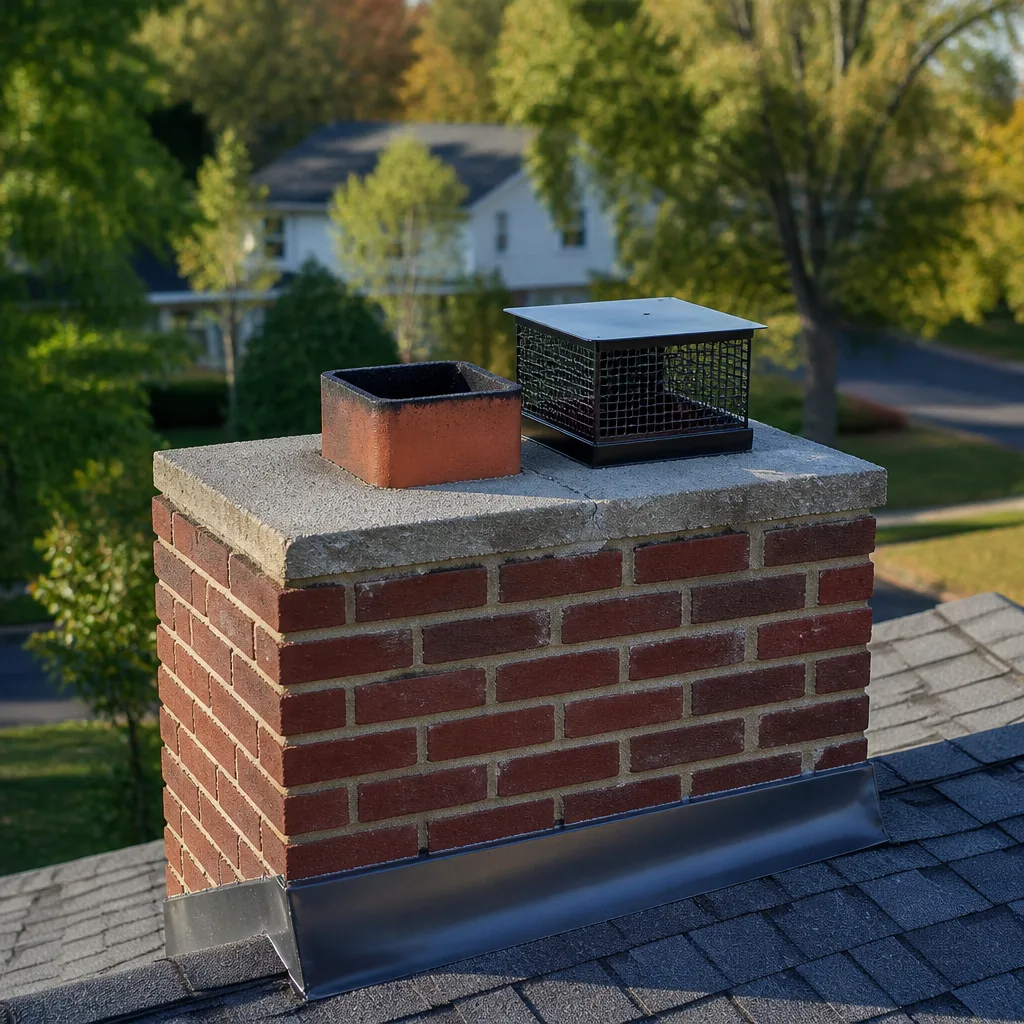 Sweep & inspection
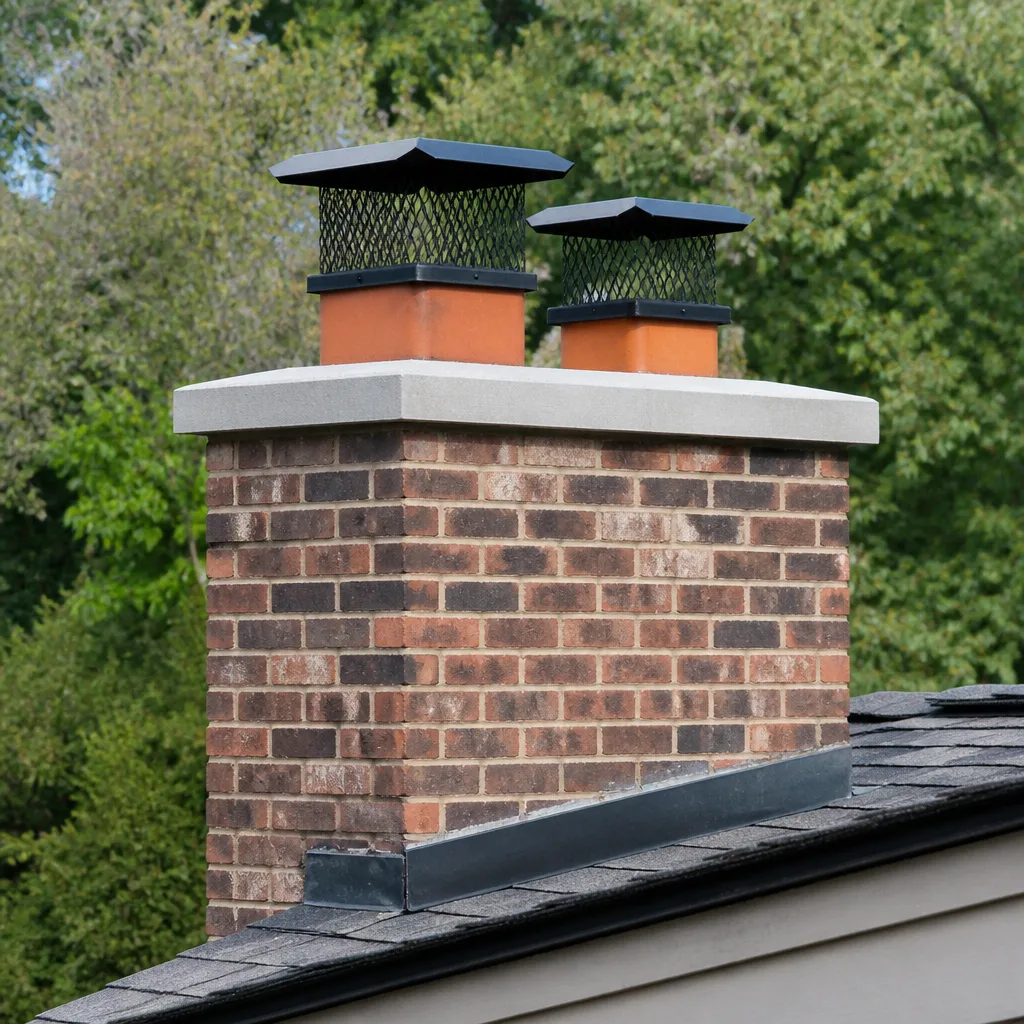 Caps & crowns
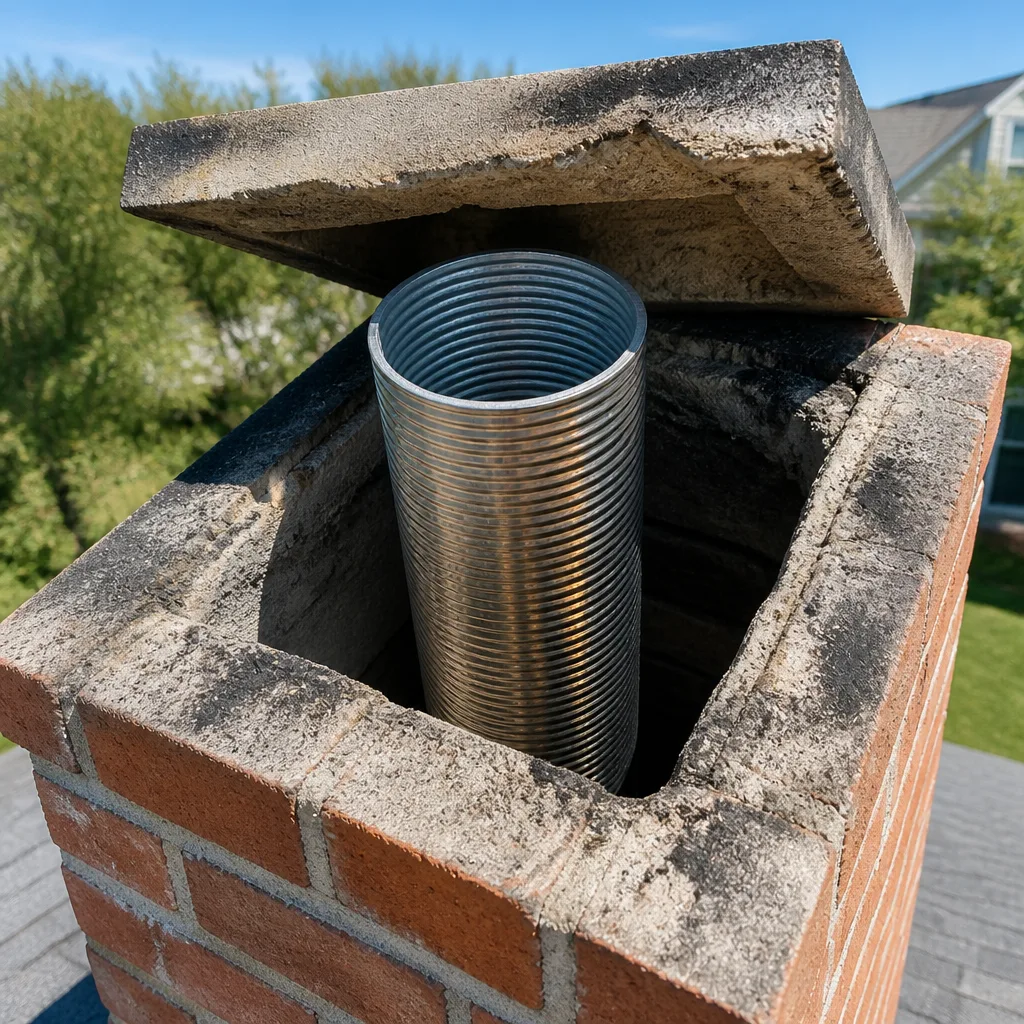 Flue relining
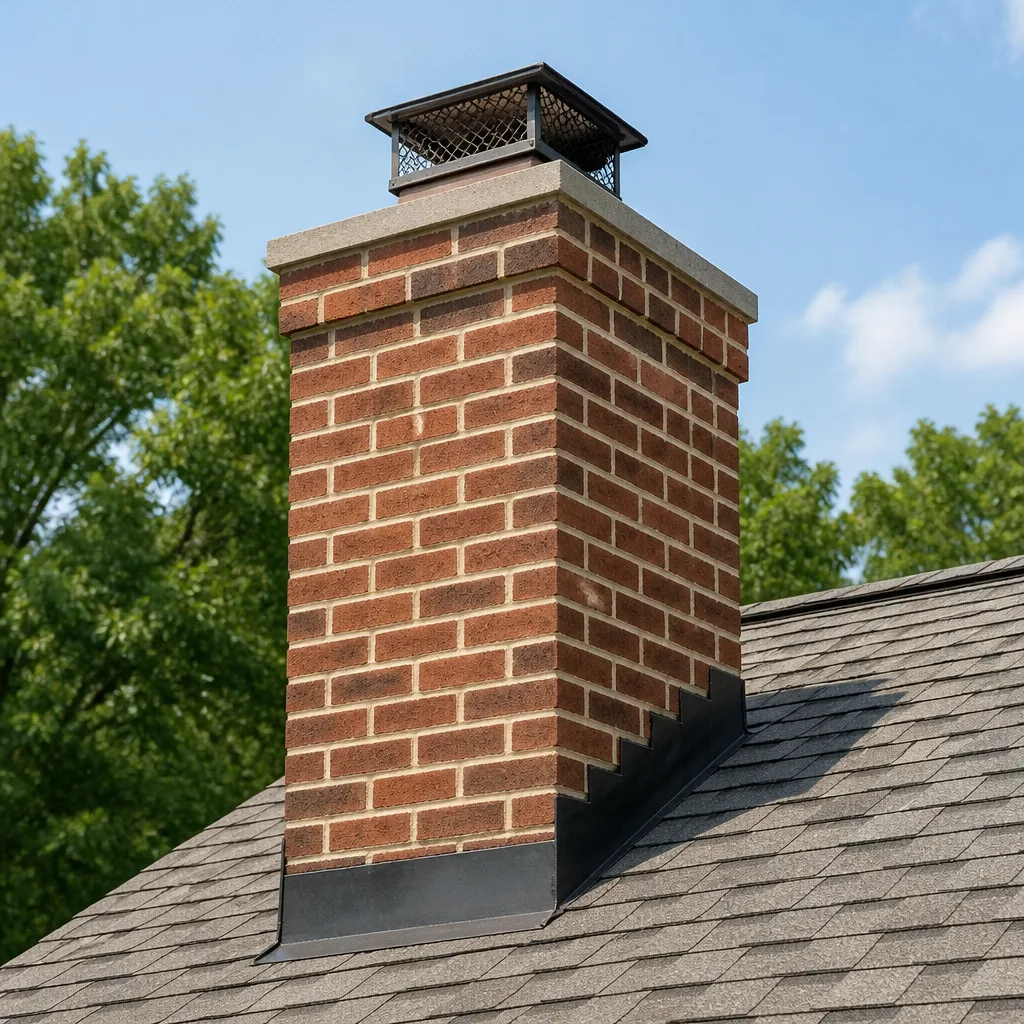 Masonry repair
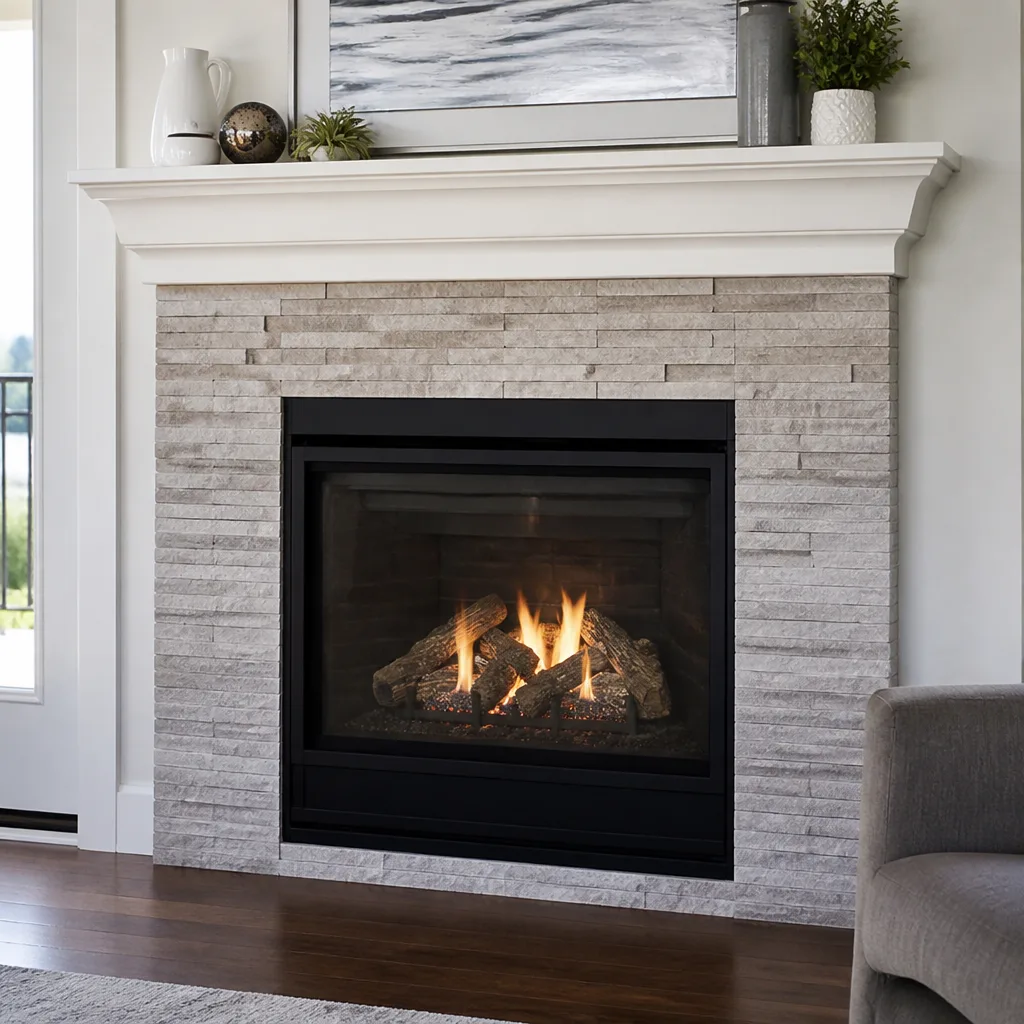 Gas fireplace service
Level 1 sweep and inspection to the NFPA 211 annual standard - flue, crown, cap, and flashing checked and photographed
Chimney sweep logs do not sweep chimneys. They loosen some creosote - which then falls where a brush and vacuum still have to collect it.
Seasonal Chimney Cleaning Care for Arvada: Year-Round Homeowner’s Guide
Most Arvada homeowners think about the chimney in October, when the first cold snap sends everyone scrambling for firewood. That timing is backwards. The months you aren’t burning – roughly March through August – are when moisture, sun, and nesting animals do the most structural damage to a chimney system. Snowmelt works into mortar joints, freeze-thaw cycles pry them apart, and a cracked crown quietly soaks the masonry from the top down. By the time you light the first fire, the damage is already done and waiting to be found. This guide reorders the maintenance calendar around when Arvada chimneys are actually most vulnerable, season by season, so you’re preventing problems instead of paying to fix them in January.
Quick Answer
Chimney care in Arvada works best on a spring-forward schedule: schedule a Level 2 inspection and sweep in March through May, after the burning season ends and before moisture season sets in. Summer is for cap, crown, and animal-nest checks, fall is for a light pre-season sweep timed before the first hard freeze, and winter is for monitoring creosote as you burn. The single most valuable habit is inspecting in spring, not fall, because that’s when Arvada’s freeze-thaw damage is easiest to catch and cheapest to stop.
Styles & brands we work with
- Sweep & inspection
- Caps & crowns
- Flue relining
- Masonry repair
- Gas fireplace service
Table of Contents
- Why Spring Is Arvada’s Real Chimney Season
- Spring (March-May): Snowmelt, Freeze-Thaw, and the Level 2 Inspection
- Summer (June-August): Nesting Animals, UV Damage, and the Cheap Fix You Skip
- Fall (September-October): Timing Your Pre-Season Sweep Around Arvada’s First Freeze
- Winter (November-February): Reading the Signs Mid-Season
- How to Build a Maintenance Calendar Around Arvada’s Climate
- The Three Inspection Levels and Which One You Need
- Caps and Crowns: The Water-Intrusion Repairs Most People Skip
Why Spring Is Arvada’s Real Chimney Season
Arvada sits at the edge of the Front Range, where the climate swings hard between wet and dry, warm and cold, sometimes in the same week. That swing is what damages chimneys. Masonry is porous. It absorbs water from snowmelt, spring rain, and even morning dew, then expands when that water freezes overnight and contracts as it thaws the next afternoon. Do that a few dozen times over a spring and small cracks in mortar joints turn into open seams. A hairline crack in a chimney crown becomes a channel that delivers water straight into the flue structure all summer.
This is why spring, not fall, is when you want eyes on the system. In October, the damage from the previous spring and summer has already had months to worsen, and you’re inspecting under time pressure with cold weather closing in. In April or May, you’re catching problems at the start of the damage cycle, with a full season of good weather to schedule the repair. In our experience, the homeowners who inspect in spring spend less on chimney repair overall because they’re fixing cracks and crowns before water turns them into structural work.
There’s a second reason spring matters in Arvada specifically. The freeze-thaw pattern that hits the Front Range in March and April is aggressive on the parts of a chimney that face north and stay shaded longest. Those are the sides where spalling brick and crumbling mortar show up first. A spring inspection that includes the exterior, not just the flue, catches that deterioration while it’s still cosmetic. If you’re already seeing spalling brick or staining on your chimney, that’s a sign to get it looked at before summer, not after. Our chimney repair work starts with that exterior evaluation, because a chimney that’s failing on the outside usually has moisture problems inside the flue too.
Spring (March-May): Snowmelt, Freeze-Thaw, and the Level 2 Inspection
Spring is the best window for a Level 2 inspection in Arvada, and here’s the practical reason: snowmelt is actively revealing problems. By late March, the snowpack on a roof has melted and drained, and any water that got behind flashing, into a crown crack, or through a failed cap seam has had a chance to show itself as staining, efflorescence (that white powdery residue on brick), or rust on the damper. Those are the visual cues an inspector reads. In fall, that evidence has often dried out and faded.
A Level 2 inspection is more than a look up the flue. In most cases it involves a camera run through the chimney to see the flue liner, joints, and offsets, plus an exterior evaluation. Spring is when you want that camera work done, because the liner is dry and any cracks or gaps are clearly visible rather than obscured by creosote from a winter of burning. If the camera finds a cracked or deteriorated flue liner, that’s a repair conversation, and it’s a much better one in May than in November.
Here’s what a spring visit typically covers:
- Exterior masonry: mortar joint condition, spalling brick, crown cracks, flashing integrity
- Chimney crown: surface cracks, separation from the flue, drainage slope
- Cap and spark arrestor: screening intact, cap secure, no animal entry points
- Flue interior: camera inspection of the liner, joints, and any offsets
- Firebox and damper: damper operation, firebox cracks, rust or moisture staining
If the camera reveals a flue that needs resurfacing rather than full replacement, HeatShield ceramic flue repair is the option that lets us restore the liner from the inside without tearing into the chimney structure. It’s the kind of finding that’s easy to address in spring and much harder to plan around in December. Arvada homeowners who schedule a spring inspection get the full diagnostic picture while the weather is on their side. That’s the heart of what a proper chimney sweep and inspection visit should deliver: a complete evaluation, not just a brush down the flue.
Summer (June-August): Nesting Animals, UV Damage, and the Cheap Fix You Skip
Summer is when the quiet damage happens. Two forces are at work on an Arvada chimney in June, July, and August: animals and the sun.
Chimney caps are excellent nesting sites. Birds, squirrels, and raccoons find the shelter of a cap or an open flue attractive, and a missing or damaged cap screen is an open door. A nest in the flue blocks draft, creates a fire hazard, and can introduce debris and nesting material into the smoke chamber. The math here is stark and worth understanding: a cap inspection and screen repair is a small, routine job. Nest removal, by contrast, is more involved – it requires getting the animal out, clearing the flue, and then usually installing the cap that should have been there in the first place. Checking the cap in early summer, before nesting season gets underway, is one of the cheapest preventive steps available.
The other summer force is ultraviolet light. A chimney crown – the concrete or masonry slab capping the top of the chimney – takes direct sun all summer. UV exposure and thermal cycling cause the crown to develop surface cracks. Once cracked, the crown no longer sheds water the way it should, and rain runs into the chimney structure instead of off it. By fall, a crown that looked fine in May can be actively leaking. This is why crown inspection belongs in summer, not just spring: you’re catching the season’s damage before fall rains and winter freeze compound it.
Arvada’s afternoon thunderstorms add to the picture. A crown with cracks and a cap with a failed seam let that summer rain straight into the flue. So summer checks we recommend include:
- Inspect the cap and spark arrestor screen for tears, gaps, or animal entry.
- Look for nesting material at the top of the flue or inside the smoke chamber.
- Examine the crown surface for new cracks or separation where it meets the flue tile.
- Check for water staining on the exterior masonry after a heavy rain.
When a crown does need repair, using professional-grade materials matters. Gelco and Famco components are specified for durability and proper fit in crown and cap work, and they hold up to Arvada’s sun-and-freeze cycle better than generic patching compounds. Our Arvada Chimney Sweep Pros team handles cap and crown installation as one of our five core service lines, specifically because water intrusion at the top of the chimney is the most common problem we find and the one most often underspecified by general handymen.
Fall (September-October): Timing Your Pre-Season Sweep Around Arvada’s First Freeze
Fall is when most people finally think about their chimney, and a pre-season sweep is genuinely worthwhile – just not for the reason most people assume. The sweep itself clears out summer debris and any leftover creosote, and confirms the flue is clear before you start burning. But the timing in Arvada is the part that catches people out.
The first hard freeze along the Arvada stretch of the Front Range tends to arrive earlier than the broader regional average, often before the calendar feels like it should. That matters because once the ground and the masonry are consistently cold, exterior repair work gets harder and the freeze-thaw cycle starts working on any cracks left over from spring. If your spring inspection flagged a crown crack or a mortar repair, fall is the deadline to get it done before winter locks it in. A sweep in early fall, before that first hard freeze, gives you time to address anything the sweep uncovers.
A good pre-season sweep is also a check-in, not just a cleaning. The technician runs a brush through the flue, but they’re also looking at:
- How much creosote built up last season and what stage it reached
- Whether the damper seals and operates correctly
- Any new cracks in the firebox or smoke chamber
- Whether the cap is still secure after a summer of weather
If the sweep turns up a problem – a cracked firebox, a failing damper, a liner issue – you want that found in September with weeks of good weather left, not in December when you’re mid-season and repairs are harder to schedule. Fireplace repair work like damper and firebox fixes is best done before the burning season, so the fireplace is ready when you need it. Our fireplace repair service exists precisely because a fall sweep often finds the fireplace needs attention before the first fire.
Winter (November-February): Reading the Signs Mid-Season
Winter is when Arvada chimneys do the most burning, and it’s when creosote quietly accumulates. Creosote is the tar-like residue left by wood smoke, and it builds in stages. Stage 1 is light, flaky, and easy to brush away. Stage 2 is harder and more tar-like. Stage 3 is a thick, glazed coating that’s a serious fire hazard and needs professional removal. The problem is that by the time most homeowners notice something is off, they’re already into stage 2.
You can’t see inside your own flue, but there are indicators that burning habits need to change before creosote thickens. Watch for these mid-season signs:
- Slower, lazier fires: if the fire struggles to draw, it’s often a sign of draft restriction or buildup
- More smoke in the room: a fireplace that used to draw cleanly but now sends smoke into the room may have a partially blocked flue
- A stronger, sharper smell: creosote has a distinct smoky, tar-like odor that intensifies as it accumulates
- Visible soot or glaze near the damper: a peek into the firebox area can reveal heavy buildup
- Dark smoke from the top of the chimney: dark, rolling smoke usually means incomplete combustion and faster creosote formation
The fix mid-season is simpler than most people think: burn hotter, drier fires. Seasoned wood, a hot fire, and adequate air supply all reduce creosote formation. But if you’re seeing heavy buildup or glaze, you shouldn’t just change your habits and keep burning – you need a professional to assess it. A chimney fire is a real hazard, and stage 3 creosote is the fuel that makes one dangerous. Safety is the reason to act here, not fear. If you’re seeing the signs above, call before the next fire.
How to Build a Maintenance Calendar Around Arvada’s Climate
Generic “clean your chimney once a year” advice doesn’t map well onto Arvada’s climate, because it treats every season the same. Here’s a maintenance calendar built around when Arvada chimneys are actually most vulnerable:
- Early spring (March-April): Schedule a Level 2 inspection after burning season ends. This is when freeze-thaw damage is visible and moisture intrusion is active. Catch cracks, crowns, and liner issues now.
- Late spring (May): Complete any repairs found in the inspection – mortar, crown, liner, or flashing – while the weather is warm and dry and materials cure properly.
- Early summer (June): Inspect the cap and spark arrestor before nesting season peaks. This is the cheap check that prevents the expensive nest removal.
- Mid-summer (July-August): Check the crown for UV cracks and confirm no water staining has appeared on the masonry. Address any new cracks before fall rains.
- Early fall (September-October): Schedule the pre-season sweep before the first hard freeze. Clear the flue, confirm the damper and firebox, and confirm the cap is secure.
- Winter (November-February): Burn seasoned wood, monitor the indicators above, and adjust burning habits if creosote signs appear.
This calendar front-loads the preventive work into the seasons when it’s easiest and cheapest to do. It’s also a single-system view: a spring inspection leads to a repair, the repair leads to a fall sweep, and the sweep confirms the system is ready. That continuity is what we build our service around. We inspect it and fix it – same crew, no referrals. From cap to firebox, we service the whole system, so the diagnostic and the repair don’t get split between two contractors.
The Three Inspection Levels and Which One You Need
Not every inspection is the same, and knowing the difference helps you ask for the right one. There are three standard levels of chimney inspection, and the level you need depends on what’s happening with your system.
- Level 1: A visual inspection of the readily accessible parts of the chimney and firebox, without special tools. Appropriate when you’re maintaining a system with no known problems – often part of a routine annual sweep.
- Level 2: A more thorough inspection that includes a camera run through the flue and evaluation of accessible areas, including attics and crawl spaces where the chimney passes through. This is the level to ask for in spring, or after any change in the system – a new appliance, a chimney fire, a repair, or a property sale.
- Level 3: A diagnostic inspection that may involve opening up parts of the chimney or walls to access hidden areas. This is reserved for specific suspected problems that Level 1 and 2 can’t resolve.
For most Arvada homeowners on a seasonal maintenance plan, a Level 2 in spring and a sweep in fall covers the year well. The Level 2 is where you get the camera evidence that tells you whether a liner needs work, and it’s the level that pairs naturally with spring’s moisture damage. When the camera shows a deteriorated flue that’s still structurally sound, HeatShield restoration can resurface it without full replacement – a repair option that sweep-only outfits can’t offer because they don’t do flue work at all.
Caps and Crowns: The Water-Intrusion Repairs Most People Skip
Ask any chimney professional about the number one source of chimney damage, and water intrusion comes up first. Two components keep water out: the cap (which covers the top of the flue and houses the spark arrestor) and the crown (the masonry or concrete slab that slopes water away from the chimney structure). When either fails, water gets in, and everything downstream – mortar, brick, liner, firebox – pays for it.
This is the category most general handymen skip or underspecify, and it’s why we handle it as its own service line. A cap that’s the wrong size, improperly secured, or fitted with a cheap screen will fail within a season or two. A crown patched with the wrong material will crack again the first freeze. Getting these right means using components specified for durability and fit. Gelco and Famco products show up in our cap and crown work for exactly that reason, and Olympia Chimney caps are built to seal properly and stay put through Arvada’s wind and freeze cycles.
The cost logic here is worth being clear about. A cap check and screen repair is a small, routine service. Nest removal and the flue clearing that follows is a bigger job, and it’s entirely preventable with a functioning cap. Likewise, a crown crack caught early is a surface repair; a crown that’s leaked all summer can mean damaged flue tile and a liner problem. The cheapest chimney repair is always the one done before water gets in. If your Arvada home has an uncapped flue, a loose cap, or a crown you can see cracking from the ground, that’s the place to start.
Common Mistakes to Avoid
- Waiting until October to think about the chimney. By fall, a full season of moisture and UV damage has already happened. Arvada’s spring freeze-thaw window is when damage is most preventable, and inspecting in fall means you’re catching it late.
- Skipping the crown because the cap looks fine. The cap and the crown are two different defenses against water. A secure cap doesn’t stop rain from running into cracks in a failing crown, so both need checking every year.
- Assuming a sweep is the same as an inspection. A sweep cleans; an inspection evaluates. Arvada homeowners with any visible deterioration – spalling brick, staining, draft problems – need a Level 2 inspection, not just a brush down the flue.
- Letting a summer nest sit until fall. A blocked flue is a fire hazard and a draft problem. Check the cap before nesting season and clear any nest promptly rather than waiting for the first fire to reveal it.
- Burning wet or unseasoned wood to stretch firewood. Wet wood burns cooler, creates more smoke, and forms creosote faster. In Arvada’s dry climate, properly seasoned wood is easy to source, and it’s the single biggest lever on creosote stage.
- Patching a crown with generic compound. A crown patched with an underspecified material will crack again after the first freeze. Use products made for the job; a crown is a structural water-shedding surface, not a cosmetic patch.
- Assuming a handyman can handle cap and crown work. These are the repairs most often skipped or underspecified by general trades, and a poorly fitted cap or crown fails within a season or two. Chimney specialists do this work every day.
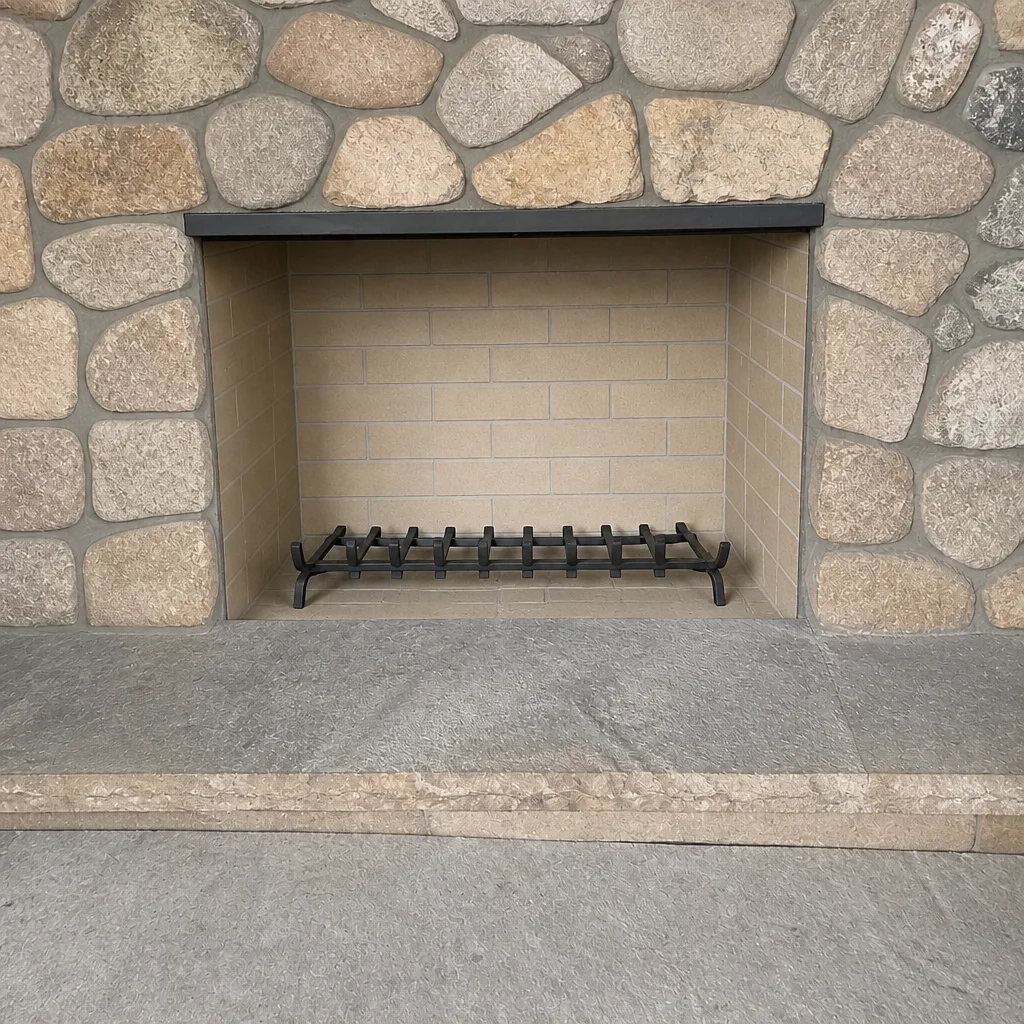
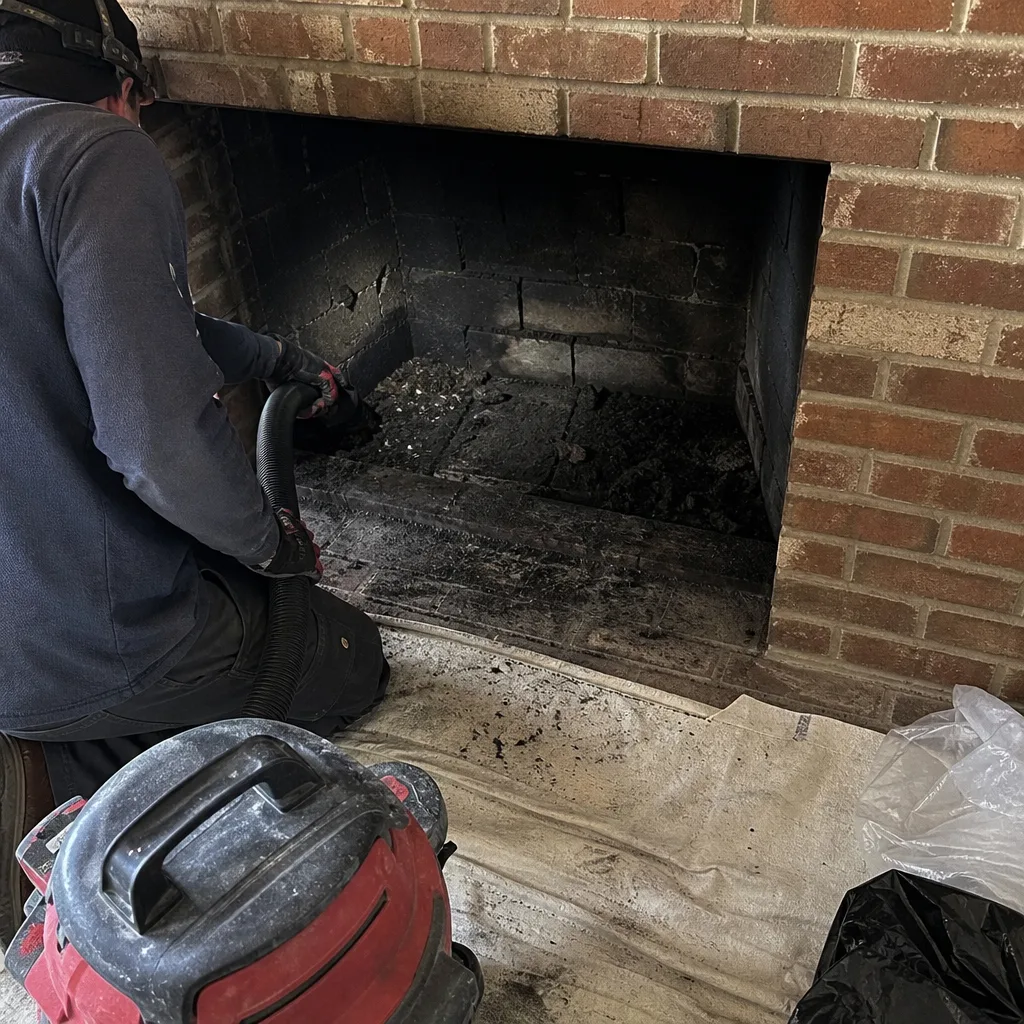
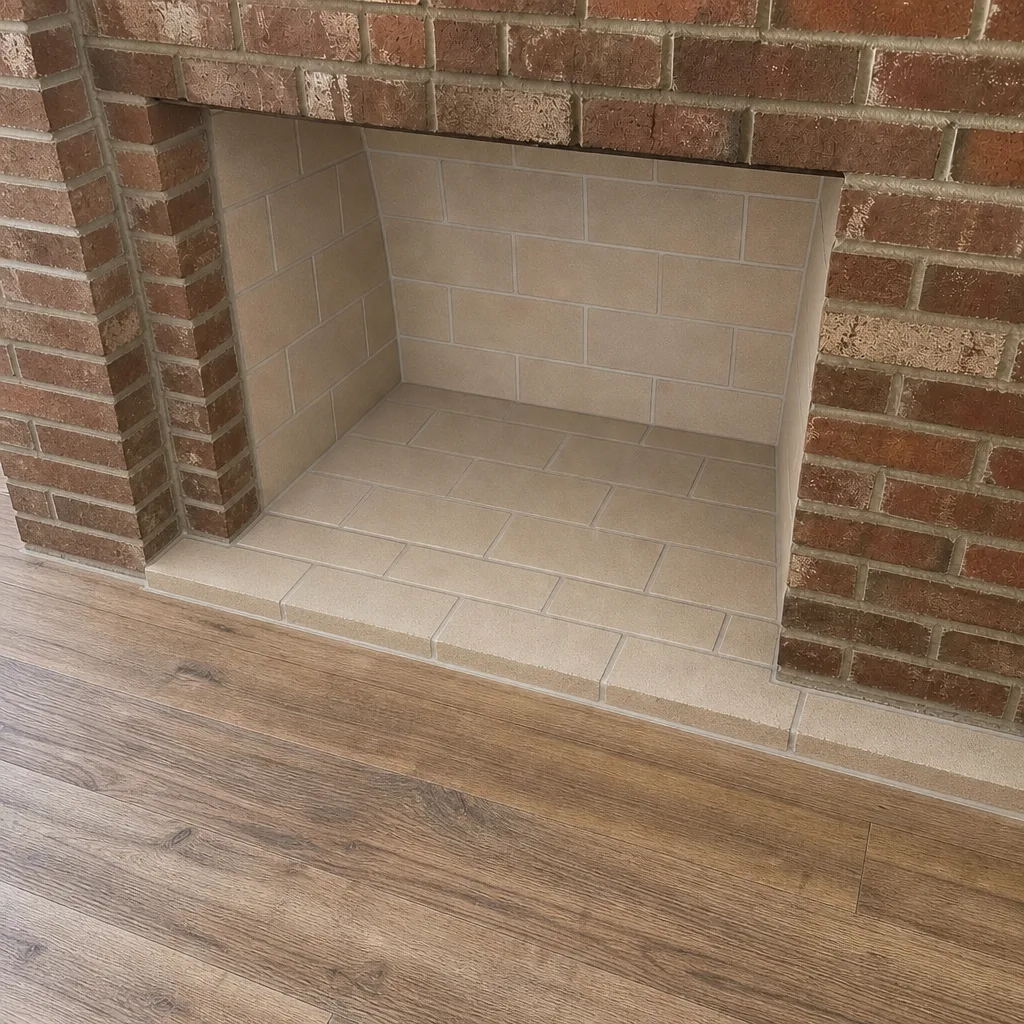
See the difference
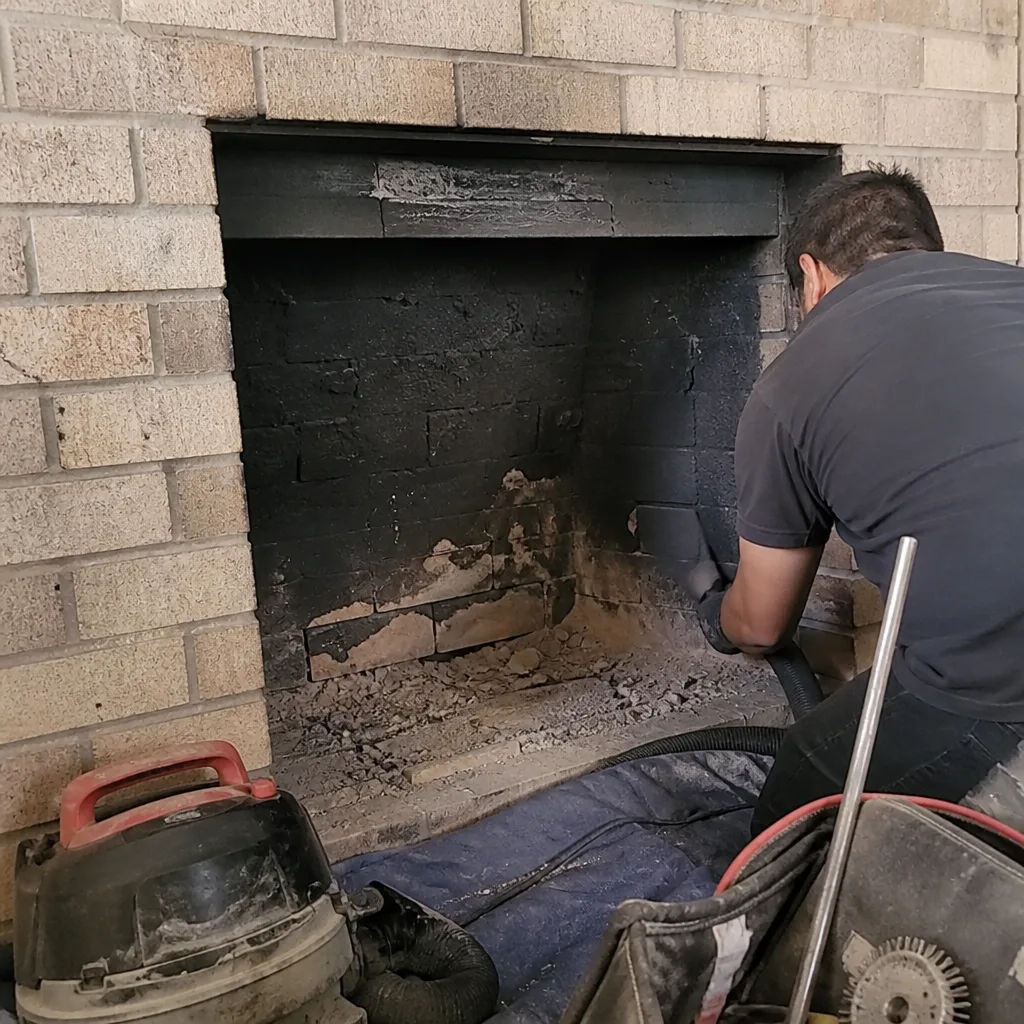 Before
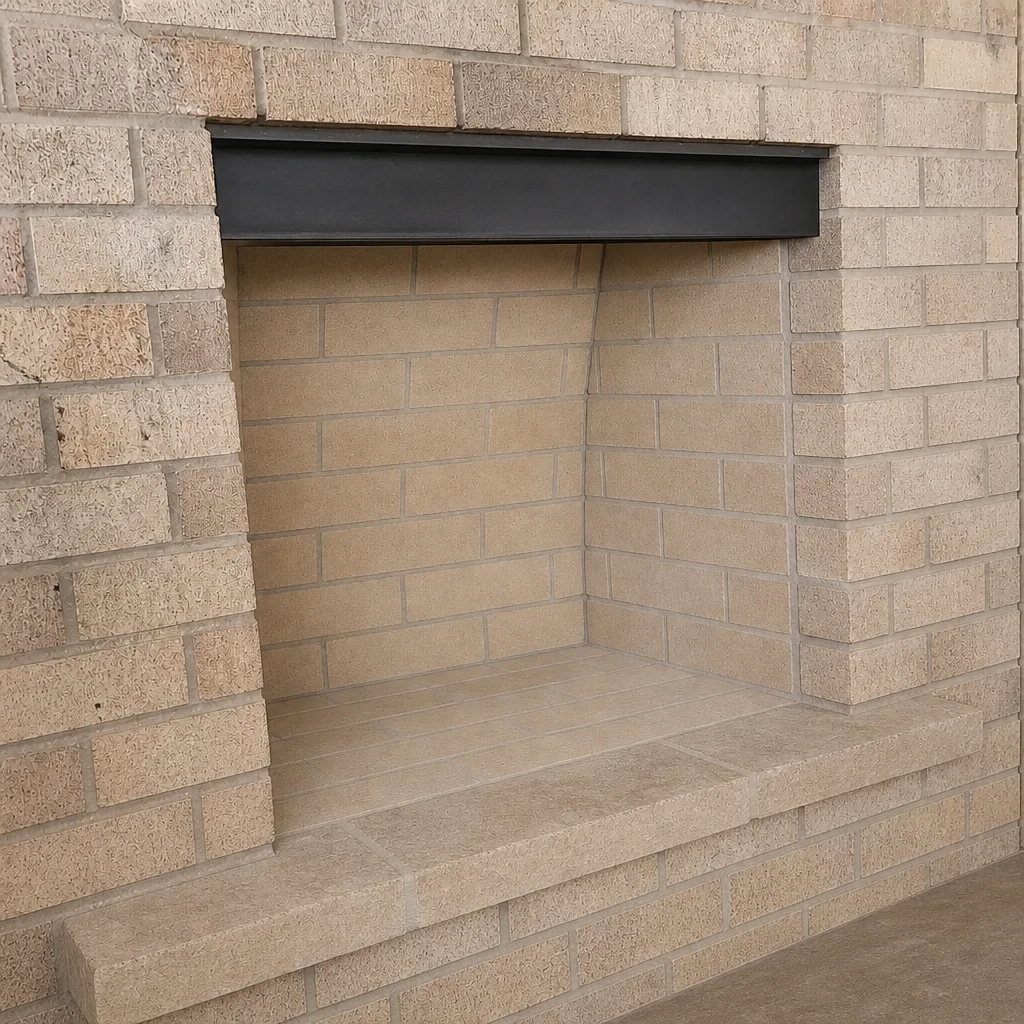 After
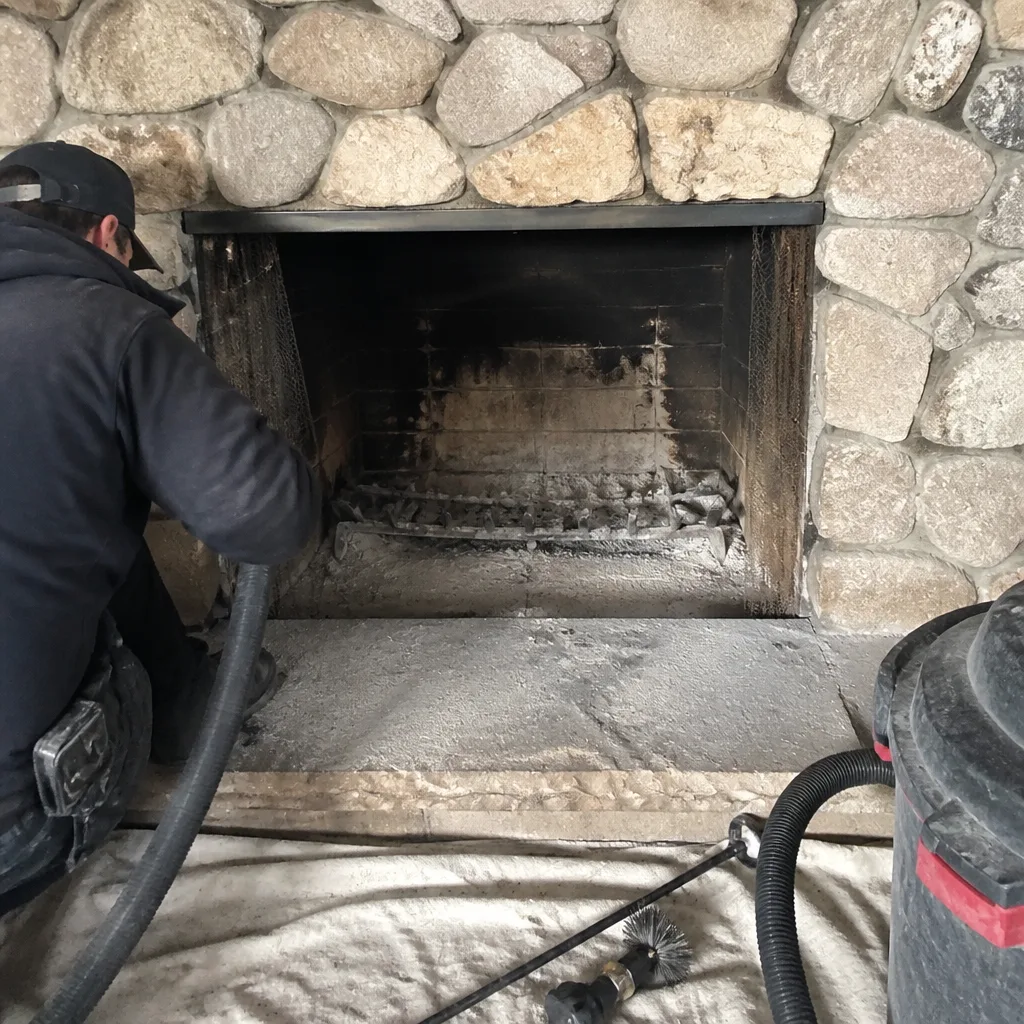 Before
 After
 Before
 After
When to Call a Professional
Some chimney work is routine maintenance; some genuinely needs a trained professional with the right tools and the right materials. Call a professional if you see spalling brick, crumbling mortar joints, or white efflorescence on the exterior masonry. Call if the crown has visible cracks or separation from the flue tile. Call if you smell a strong creosote odor, see dark smoke from the chimney, or notice smoke backing into the room. Call if the cap is missing, loose, or has a torn screen. And call if it’s simply been a while and you want the system evaluated from cap to firebox before the next burning season. Safety matters most with creosote buildup and liner damage, and those aren’t things to diagnose from the ground. Arvada Chimney Sweep Pros offers free estimates in Arvada – call (877) 502-4468. We answer 24/7. Fast dispatch from 7am to 7pm, Sunday through Friday. Our technicians have up to 8 years of experience, and we work with professional-grade materials including DuraFlex, HeatShield, Olympia Chimney, and Copperfield.
Frequently Asked Questions
Once a year is the baseline for most Arvada homes that burn regularly, and we recommend a spring inspection plus a fall sweep to cover the full seasonal cycle. Homes that burn heavily or burn unseasoned wood may need more frequent sweeps. The sweep should happen before the first hard freeze, and the inspection is best in spring when moisture damage is visible. Call (877) 502-4468 for an exact quote – estimates are free.
Spring is better because that’s when Arvada’s freeze-thaw cycle and snowmelt are actively revealing damage, and you have a full season of good weather to complete repairs. In fall, the damage from spring and summer has had months to worsen and you’re working against cold weather. A spring Level 2 inspection catches cracks, crowns, and liner issues while they’re still easy to fix.
Skipping maintenance lets moisture damage and creosote buildup compound. Water intrusion from a failed crown or cap can damage mortar, brick, and the flue liner over a season, turning a small repair into a bigger one. Creosote that reaches stage 2 or 3 becomes a fire hazard. The risks are real, but they’re also preventable with a simple spring inspection and fall sweep. Call (877) 502-4468 to get on a schedule – estimates are free.
Not every liner problem means full replacement. If the flue is structurally sound but the liner surface is deteriorated, HeatShield ceramic flue repair can resurface it from the inside without a full reline. The camera inspection tells you which situation you’re in, and we don’t recommend liner work without evidence you can see. When a full liner is needed, we use DuraFlex liner systems, which are specified by certified chimney professionals.
Yes. Caps without intact screens, or open flues, are easy entry points for birds, squirrels, and raccoons, especially in summer. A nest blocks draft and creates a fire hazard. A cap inspection in early summer is a small routine job; nest removal and flue clearing is more involved. Getting a proper cap installed with quality components is the fix, and Olympia Chimney caps are built for exactly that.
A sweep cleans the flue; an inspection evaluates the whole system, including the liner, crown, cap, and firebox. Most Arvada homes need both, and we handle them together so nothing gets missed. If you have visible deterioration or draft problems, ask specifically for a Level 2 inspection. Call (877) 502-4468 for an exact quote – estimates are free.
The Bottom Line
Arvada’s chimney calendar doesn’t follow the conventional “clean once a year in fall” advice. The real risk window is spring through summer, when moisture, UV, and animals work on the system while it’s idle. Inspect in spring, repair in late spring, check the cap and crown in summer, and sweep in early fall before the first hard freeze. Winter is for monitoring creosote and adjusting burning habits. That sequence front-loads prevention and keeps the whole system – from cap to firebox – evaluated and maintained as one unit. Whether it’s a routine sweep, a Level 2 inspection, HeatShield flue restoration, or cap and crown work, the goal is the same: catch problems before they become expensive, with evidence you can see for yourself.
Call (877) 502-4468 for a free estimate. We answer 24/7. Fast dispatch from 7am to 7pm, Sunday through Friday. Our technicians have up to 8 years of experience, and we work with professional-grade brands including HeatShield, Gelco, Olympia Chimney, and Famco. We inspect it and fix it – same crew, no referrals.
Written by the team at Arvada Chimney Sweep Pros.